

Understanding 'Tech': A Comprehensive Look at Today's Technology Landscape
Technology, or 'tech' as we often call it, has evolved dramatically over time. It once conjured images of industrial machinery and mechanical inventions. Today, however, it signifies a vast, ever-evolving field that permeates nearly every facet of modern existence.
Historical Evolution of Technology
Historically, 'tech' referred to pivotal inventions like the wheel, which revolutionized transport; the printing press, which democratized information dissemination; or the steam engine, which fueled the Industrial Revolution. Each of these innovations profoundly reshaped human society, influencing settlement patterns and interpersonal interactions.
Current Technology Landscape and Innovations
Today's tech landscape is characterized by its dynamism and rapid pace, marked by relentless innovation and sweeping transformations. Headlines frequently spotlight breakthroughs in pivotal sectors. Artificial Intelligence (AI) and Machine Learning (ML) continue to capture significant attention, rapidly transitioning from theoretical concepts to ubiquitous practical tools.
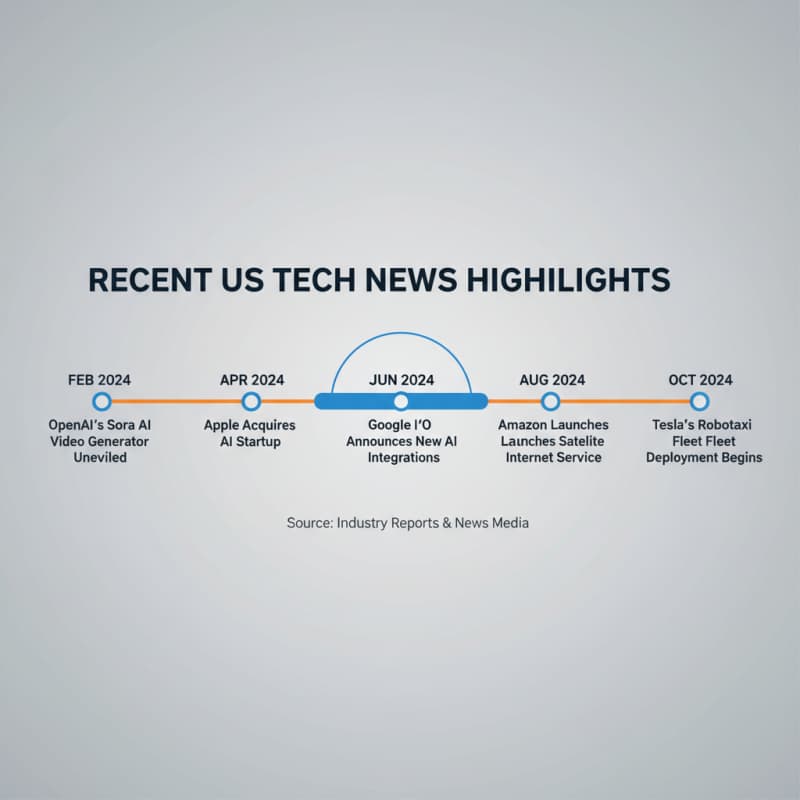
We are witnessing monumental advancements in large language models (LLMs) and generative AI—systems capable of producing remarkably human-like text, generating photorealistic imagery, and even writing functional code. This revolution is reshaping industries profoundly, from altering content creation and marketing strategies to accelerating software development and enhancing research methodologies. Businesses worldwide are actively integrating these AI capabilities into their offerings, deploying smart assistants that personalize user experiences and enterprise software that streamlines complex operations.
Leading Companies and Their Roles
Orchestrating many of these significant transformations are the so-called 'Titans of Tech'—a select group of major corporations whose ambitious innovations and strategic decisions frequently shape the trajectory of the entire industry. Companies such as Google, Apple, Microsoft, Amazon, and Meta continually expand their extensive ecosystems, introducing new hardware, software, and services that profoundly influence both consumers and businesses globally.

Beyond these established giants, companies like NVIDIA have become indispensable. Their powerful Graphics Processing Units (GPUs) extend far beyond gaming, serving as the fundamental hardware for nearly all advanced AI development, machine learning tasks, and high-performance computing worldwide. OpenAI, a pivotal player in AI research, captured global attention with ChatGPT and DALL-E, tools that vividly demonstrated the potent capabilities of generative AI, impacting creative industries, automating content generation, and transforming professional productivity tools across diverse sectors.
Role of Universities in Tech Innovation
While major corporations often command the spotlight, universities play an equally vital, albeit less publicized, role in pioneering technological innovation and cultivating the next generation of leaders. Specialized technological universities, such as Texas Tech, Georgia Tech, and Virginia Tech, serve as critical hubs for fundamental research, talent development, and the incubation of nascent ideas.
Technology's Broad Impact on Society
Technology's influence has expanded so profoundly that it now permeates nearly every aspect of daily life and global society. Communication has been fundamentally transformed by social media platforms, high-definition video conferencing, and instant messaging applications that effectively erase geographical distances. Healthcare, too, has undergone radical changes: telemedicine enables remote consultations with medical professionals, wearable health devices provide continuous monitoring and early detection of health issues, AI-driven diagnostics expedite and enhance accuracy in assessments, and accelerated drug development leads to faster therapeutic interventions.
Future Trends and Emerging Frontiers
Looking ahead, navigating the future of technology demands continuous vigilance regarding emerging trends and a proactive approach to understanding their implications. We can anticipate further advancements in personalized experiences across numerous domains—from tailored medical treatments based on an individual's unique genome for precision medicine, to educational programs that adapt dynamically to a student's learning style, and consumer recommendations that exhibit an almost uncanny level of accuracy.